As we move into summer, most homeowners in Idaho Falls and throughout Eastern Idaho aren’t thinking about grubs yet — mainly because they haven’t seen damage.
That’s the tricky part about grub damage in Idaho Falls lawns: by the time you notice symptoms, insects have usually already been feeding on the root system for weeks.
The term “grubs” is also used very broadly. Most homeowners think of one specific insect, but in reality, several different larvae can damage turf by feeding on roots, crowns, and lower stems below the surface.
Historically, the most common grub issue we dealt with in Idaho Falls lawns was Billbugs.
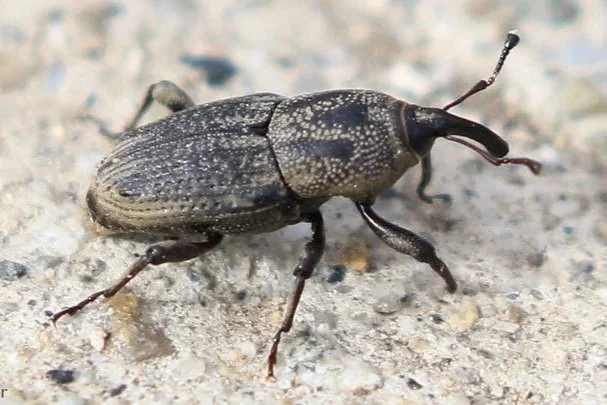
Adult Billbugs are small black beetles with a long split-snouted appearance. In a typical Eastern Idaho season, they begin laying eggs around mid-May through early June. Once those eggs hatch, the larvae immediately begin feeding on the lawn below the surface.
Billbug damage usually starts showing up in late June through early July. After that, activity slows down for the season, although some larvae can linger into August.
For years, this pattern lined up very consistently with what we saw in lawns throughout Idaho Falls, Ammon, Rigby, Shelley, and the surrounding areas.
Then we started noticing something different.
After spending a season trying to figure out why we were still finding active grub damage in September, we realized another insect had become much more common in Eastern Idaho lawns: Cranberry Girdler.
Unlike traditional Billbugs, Cranberry Girdlers can continue causing pressure much later into the season.
The larvae become active once soil temperatures begin warming in spring, eventually pupating into small tan-colored moths that many homeowners have probably seen flying out of the lawn while mowing or walking through the yard.
Most people never realize those moths are connected to grub damage.
After mating, the moths lay eggs that hatch into another wave of root-feeding larvae later in the summer. Part of the population can also overwinter in the lawn and continue development the following season, which is one reason damage can feel much more prolonged and inconsistent compared to traditional Billbug activity.
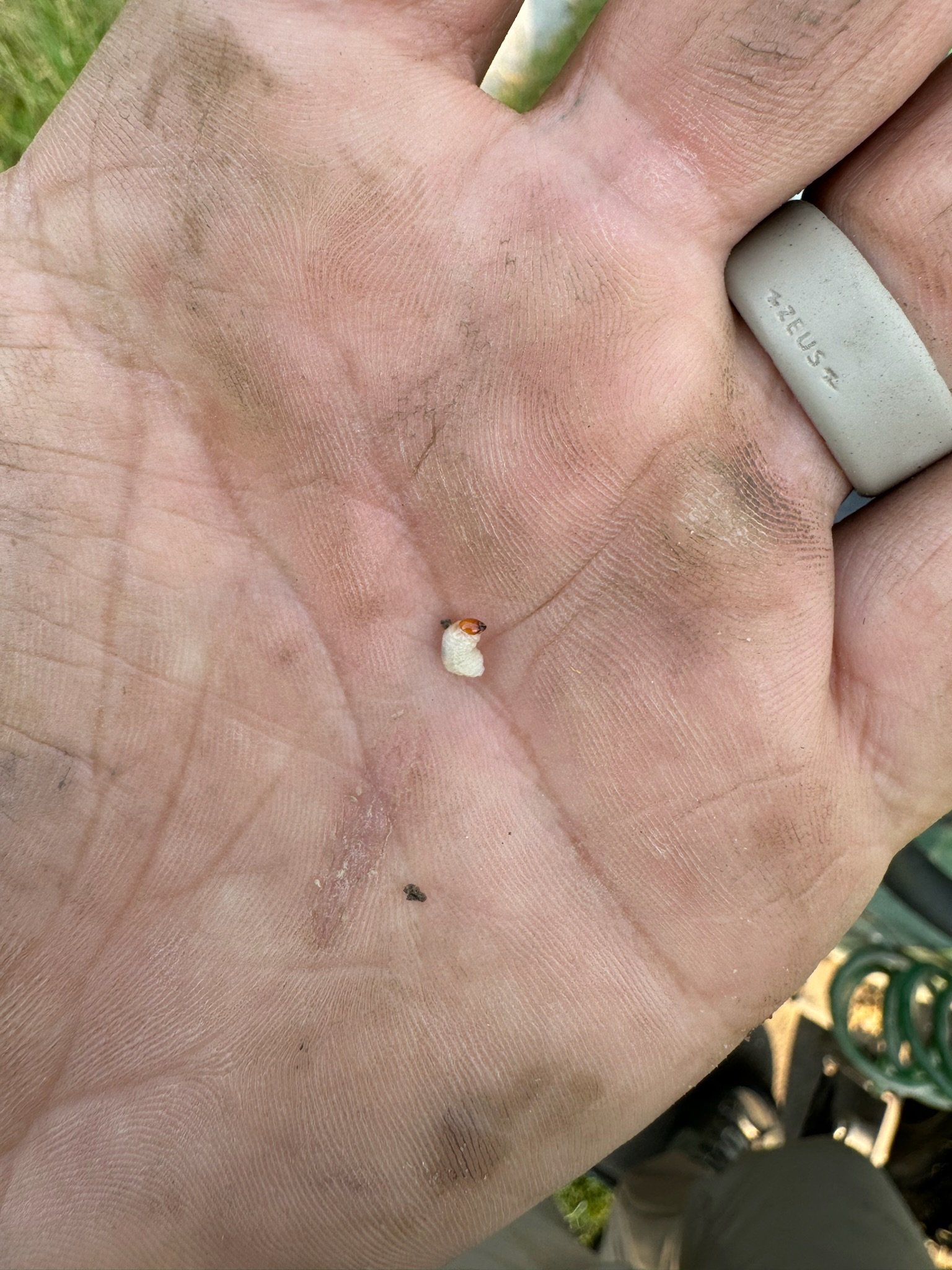
The two insects also look very different once you actually find them in the soil.
Billbug larvae are typically short, creamy white, and maggot-like in appearance with a brown head. They are smaller, thicker-bodied, and legless.
Cranberry Girdler larvae look much more like a small caterpillar with a longer, skinnier, segmented body and a brownish head.
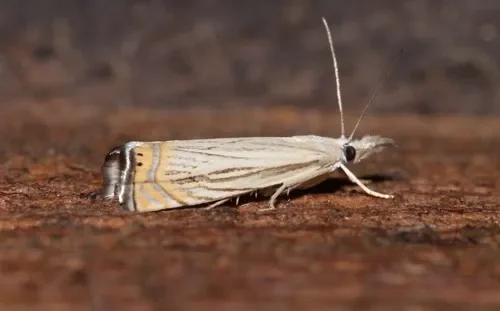
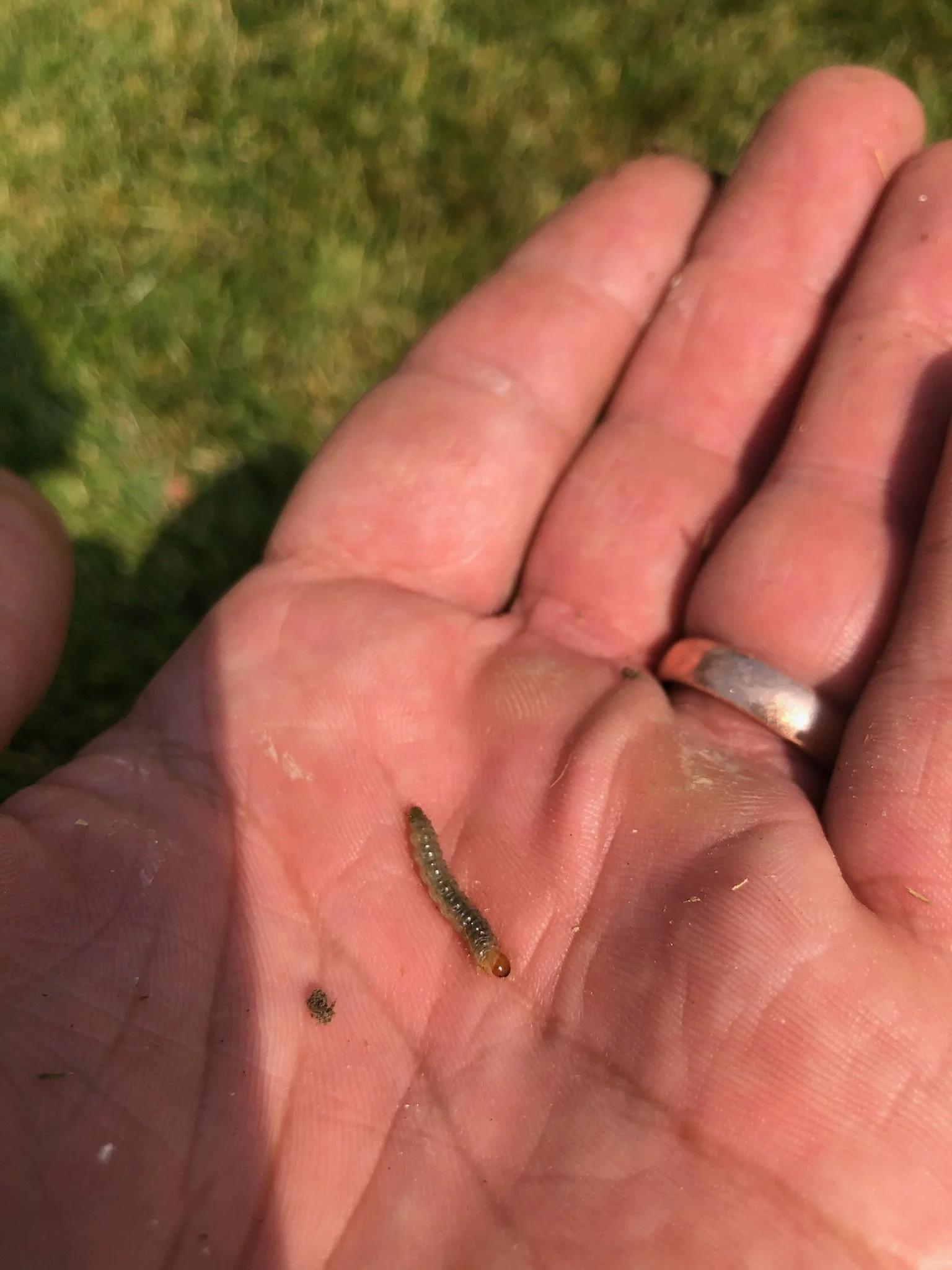
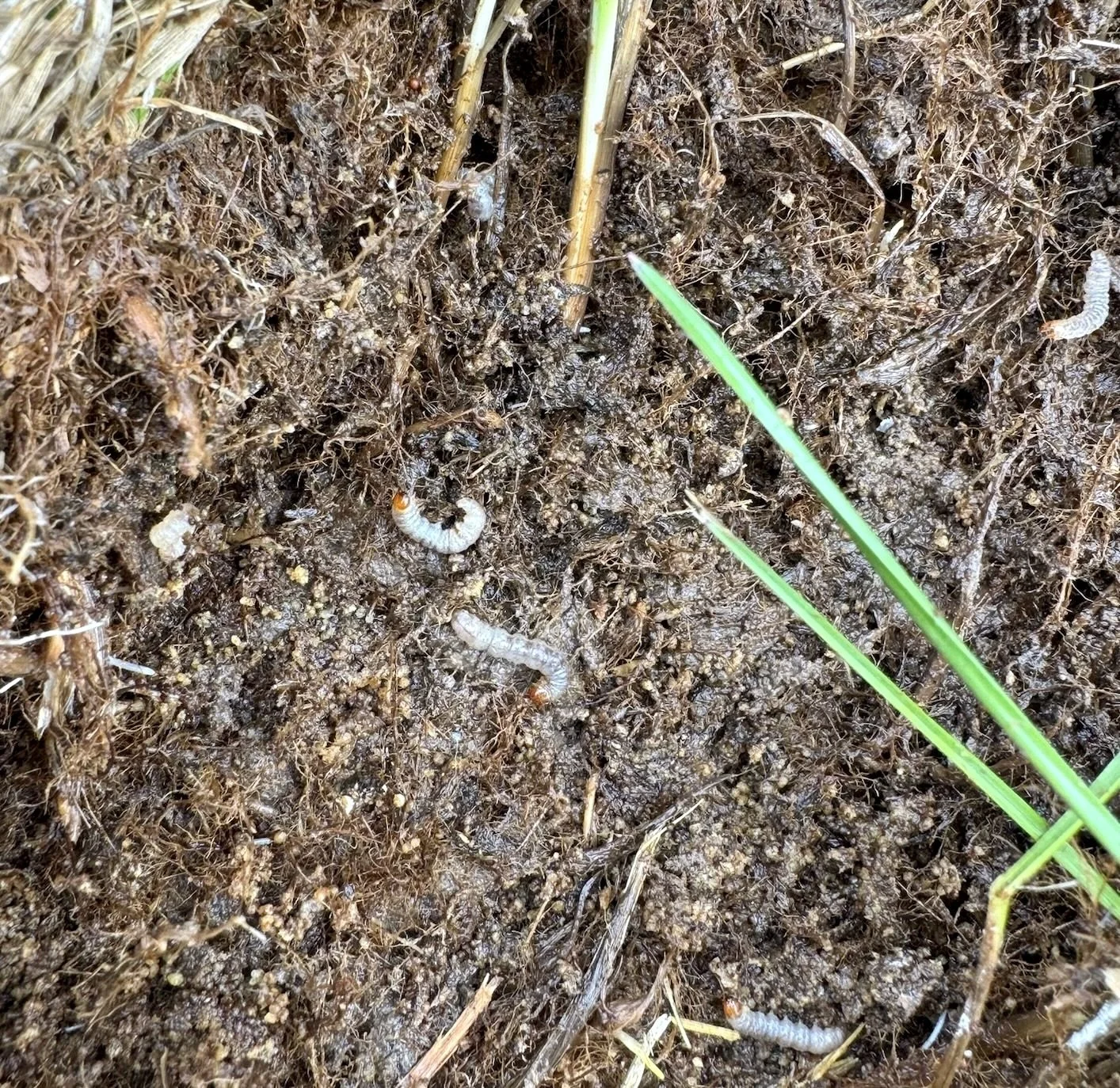
Most homeowners never notice the difference because the damage they cause can look very similar from the surface — especially early on.
This is also why some Idaho Falls lawns suddenly begin declining in late summer even when watering appears to be correct.
In many cases, homeowners assume the lawn is dry and begin adding more water — but the lawn still doesn’t recover.
That’s because grub-damaged grass often mimics drought stress.
The lawn is not “dry” because it lacks water. It looks dry because the root system has been chewed off underground, cutting off the grass plant’s ability to move moisture and nutrients to the blade.
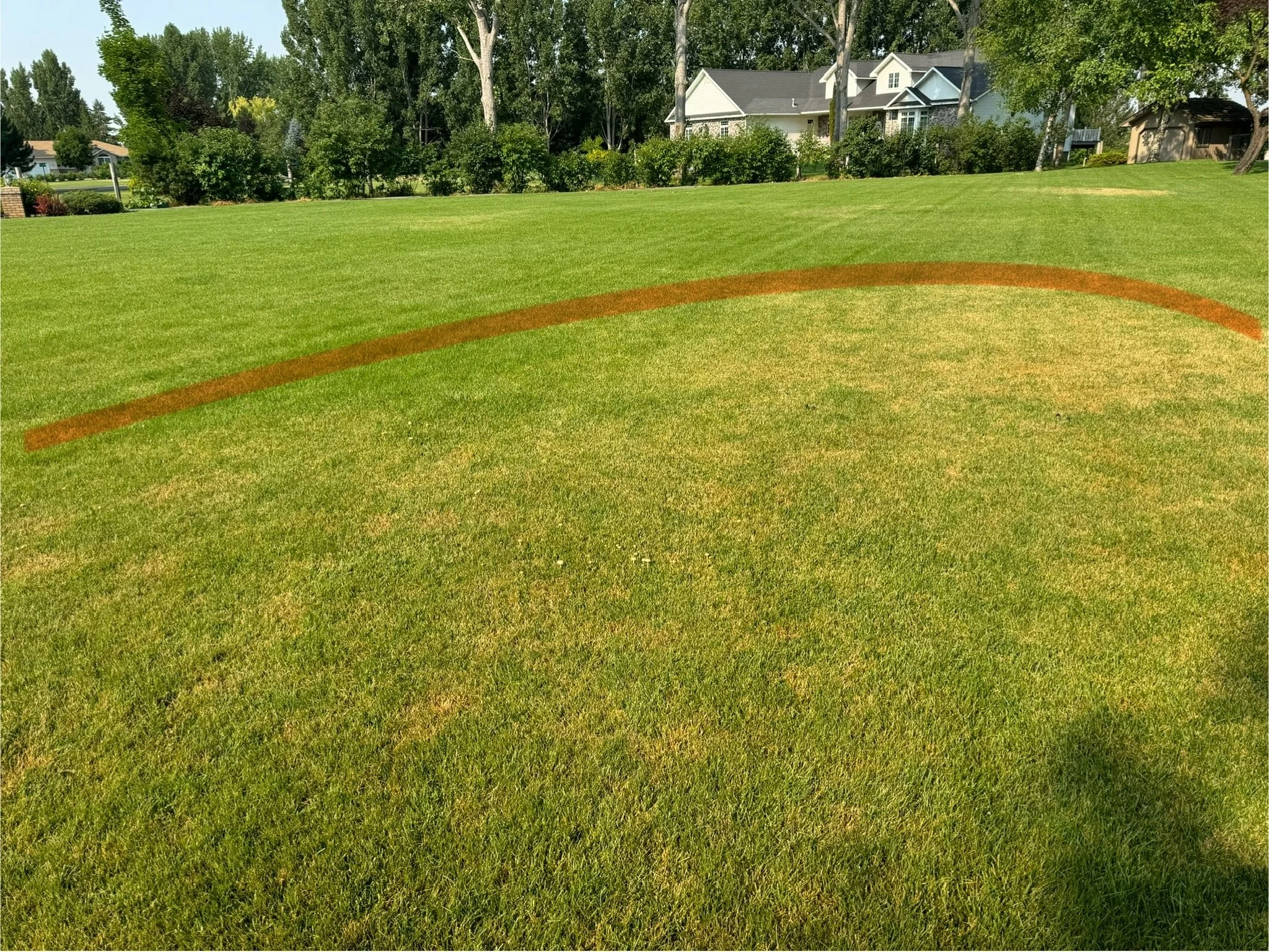
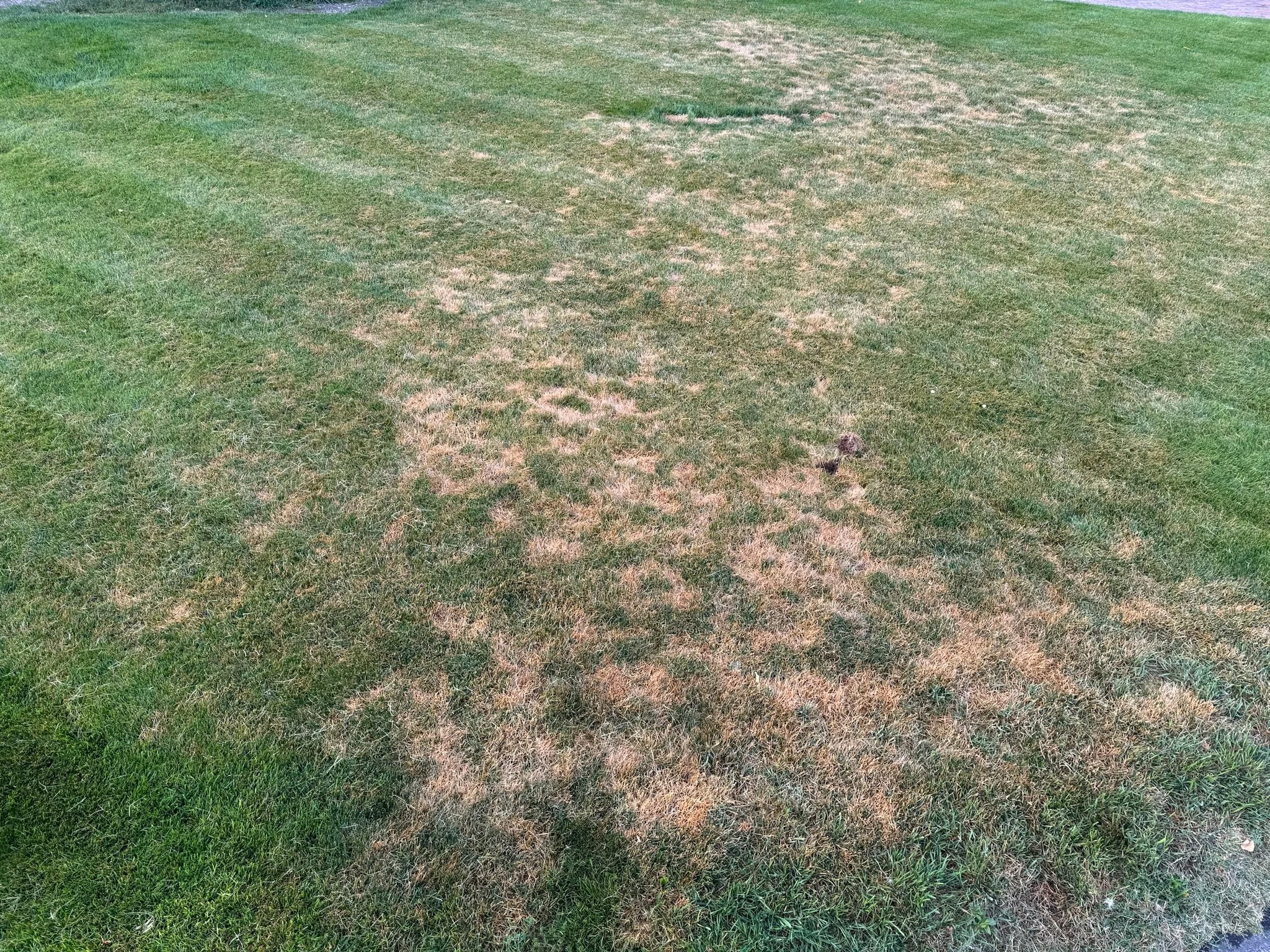
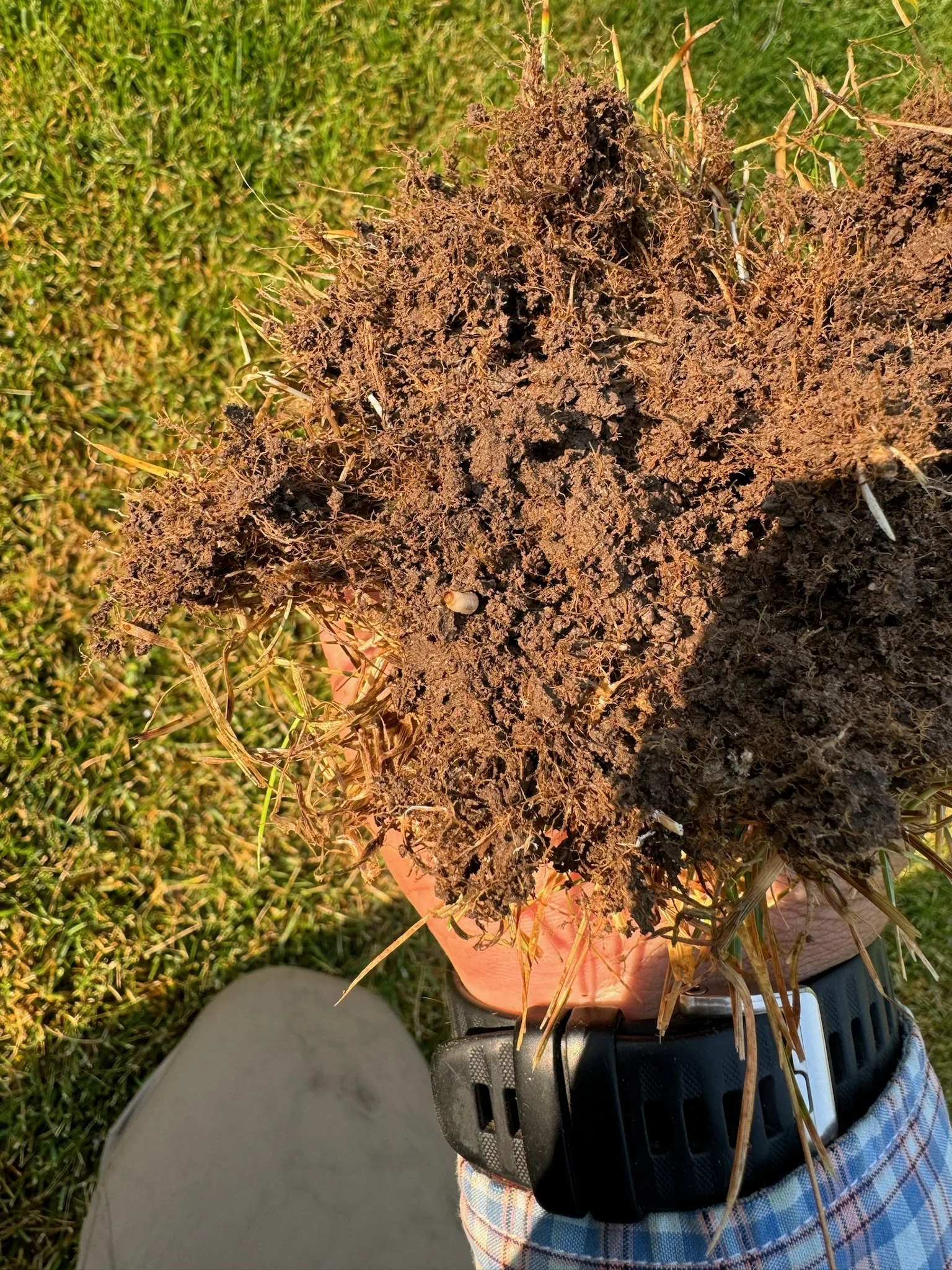
One of the easiest ways to check for grub damage in your lawn is to grab a handful of grass and pull upward.
If the turf pulls up easily like loose hair or carpet, there’s a good chance the root system has already been severely damaged.
When you look closely at the grass that pulls up, the roots will often appear almost “sawed off” near the crown of the plant. You may also notice a tan, sawdust-like material around the crown and root area from the feeding activity.
This is one of the biggest indicators that the issue is insect related rather than simply drought stress or underwatering.
This is something we regularly see in neighboring lawns and even lawns we’ve taken over after damage has already started.
Because of these newer insect pressures, we’ve had to change both the products and timing we use for grub prevention in Idaho Falls and Eastern Idaho lawns. Older treatment approaches aimed primarily at beetle species are no longer enough in many situations.
Today, we use products designed with longer residual control that target both beetle and moth-related grub cycles. Proper timing is critical.
Since making those changes, we’ve been able to dramatically improve grub prevention and keep lawns protected throughout the season.
At Evergreen Lawn & Tree, we almost always recommend preventative grub treatments rather than waiting for visible damage.
Once a lawn starts showing symptoms, recovery can easily take 4–8 weeks depending on severity, temperature, irrigation, and overall lawn health.
Preventing the damage is significantly easier — and far less stressful on the lawn — than trying to repair it afterward.