Spring Lawn Care in Idaho Falls: What to Do in Early Spring for a Healthy Lawn
Spring in Eastern Idaho can feel all over the place—cold mornings, random snow, then a warm day that makes you think everything should be green already.
But here’s the reality:
What you do in the first 30–45 days of spring has a huge impact on how your lawn performs the rest of the year.
Most homeowners wait until their lawn looks green to start thinking about it. By that point, they’re already playing catch-up.
What’s Actually Happening in Your Lawn Right Now
Even if your lawn still looks brown or matted, a lot is already happening beneath the surface.
As soil temperatures begin to warm:
Grass roots start growing again
Soil microbes become active
Trees and shrubs begin moving water and nutrients
Insects and pests start waking up
Here’s the key takeaway:
👉 Most of the important activity in your lawn is happening below the surface before you ever see green grass.
That’s why early spring matters so much.
The 6 Things Every Homeowner Should Do in Early Spring
If you focus on these six areas, you’ll set your lawn up for a strong, healthy season.
1. Clean Up and Assess Your Lawn
Start by removing leaves, debris, and any leftover buildup from winter.
Lightly rake matted grass to help it stand back up and allow sunlight and air to reach the soil.
This is also the time to:
Look for winter damage
Check for vole activity (common in Eastern Idaho)
See how your lawn feels (hard vs. spongy)
Most lawns aren’t dead—they’re just waking up.
2. Address Thatch and Soil Compaction
Two of the most common issues we see are:
Excess thatch (buildup near the surface)
Compacted soil
Power raking (dethatching) removes excess organic material that can block water, nutrients, and oxygen.
Core aeration relieves compaction by pulling plugs from the soil, allowing:
Better water penetration
Improved root growth
Increased oxygen flow
Both help your lawn perform better throughout the season.
3. Apply Pre-Emergent Weed Control
This is one of the most important steps—and one of the most commonly missed.
Pre-emergent herbicides prevent weeds before they grow.
Instead of reacting to weeds, you stop them from ever becoming a problem.
In our area, this is especially important for:
Dandelions
Crabgrass (which has become more common in recent years)
4. Timing Matters More Than Anything
Pre-emergent works best when applied before soil temperatures reach about 50–60°F.
If you wait until you see weeds:
👉 You’re already too late.
This is why pre-emergent sometimes gets a bad reputation—most people apply it after the window has already passed.
5. Improve Soil Health
One of the most overlooked parts of lawn care is soil health.
You can water and fertilize all you want, but if the soil isn’t healthy, your lawn will always struggle.
Healthy soil includes:
Organic matter
Proper structure
Active microbial life
These all help improve:
Nutrient availability
Moisture retention
Root development
6. Apply Early-Season Fertilization
Once your soil is in a good place, fertilization provides the nutrients your lawn needs to grow.
Early-season fertilization helps:
Green up the lawn
Thicken turf
Support strong root development
A thick, healthy lawn is one of the best defenses against weeds.
7. Protect Trees and Shrubs Early
Your lawn isn’t the only thing waking up—your trees and shrubs are too.
Many insect problems actually start early in the season.
Preventative treatments like:
Dormant oil sprays
Systemic insecticides
can help protect your trees before damage occurs.
With trees, prevention is key—once damage is visible, it’s often much harder to correct.
3 Common Spring Lawn Care Mistakes
We see these every year:
1. Waiting until the lawn is green to act
By then, you’ve already missed key opportunities.
2. Trying to fix weeds instead of preventing them
Prevention is always easier—and more effective.
3. Ignoring tree health
Tree issues often show up after damage has already been happening.
Avoiding just these three mistakes will put you ahead of most homeowners.
Final Thoughts
The biggest takeaway is simple:
👉 Healthy lawns don’t happen by accident.
They’re the result of doing the right things at the right time.
If you focus on:
Cleanup
Thatch and compaction
Pre-emergent timing
Soil health
Fertilization
Tree protection
you’ll set your entire landscape up for success.
Need Help With Your Lawn This Season?
If you’d rather have this handled for you, we offer full-season lawn and tree care programs built specifically for Eastern Idaho conditions.
👉 Get Your Estimate: evergreenlt.com/contact
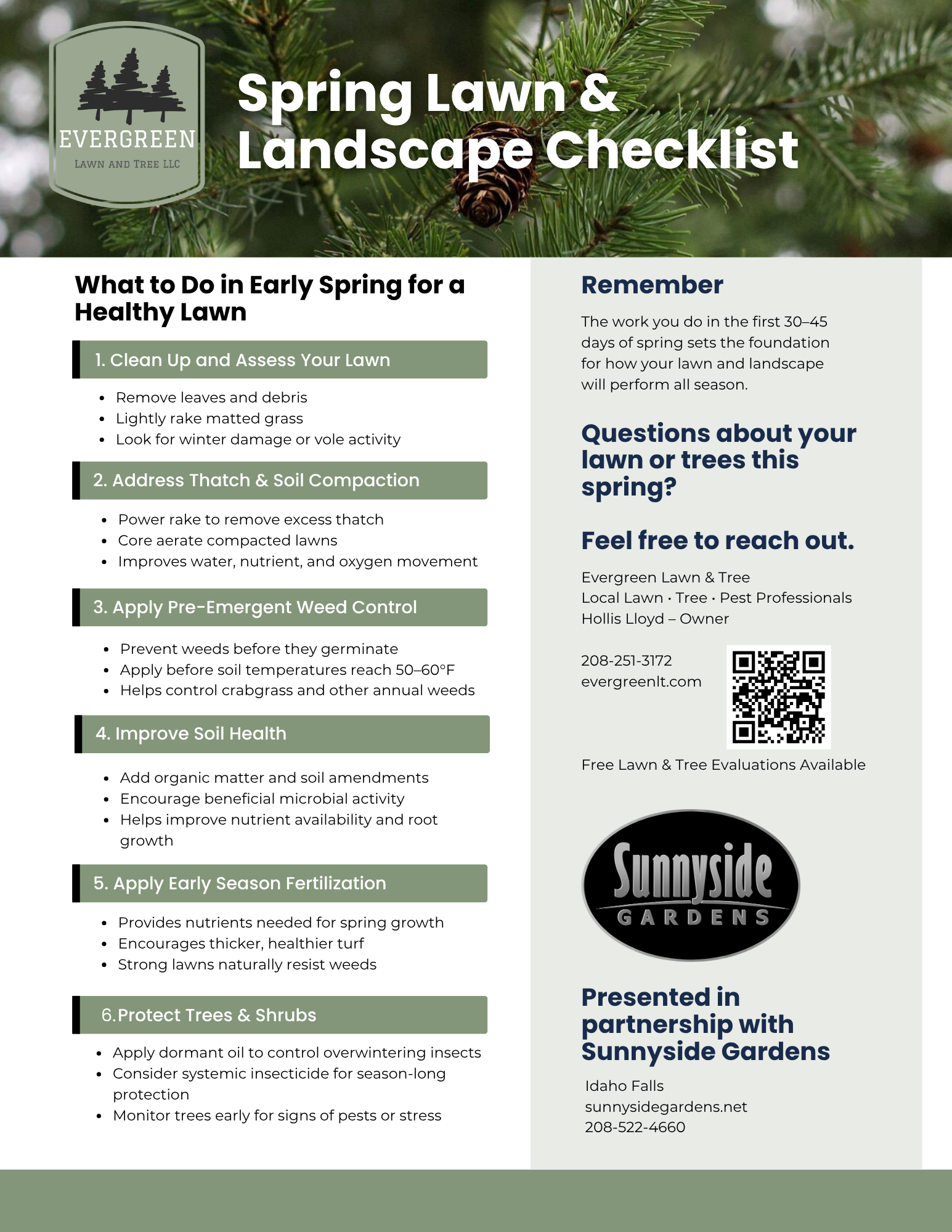
And if you haven’t already, download our Spring Lawn & Landscape Checklist to keep everything on track this season.