
What Are Those White Cotton Balls Hanging From My Maple Tree?
Understanding Cottony Maple Scale in Idaho Falls & Eastern Idaho
We receive calls every single week about sick trees.
In fact, if you asked our office administrator what the most common tree-related call is, she'd probably answer it before the homeowner even finishes describing the problem.
The conversation usually goes something like this:
"My tree has these white toilet paper-looking things hanging from the branches. What are they?"
Most homeowners know what they're looking at isn't normal. They suspect it might be an insect, but they aren't sure what it is, whether it's harmful, or how to get rid of it.
In most cases, the culprit is Cottony Maple Scale.
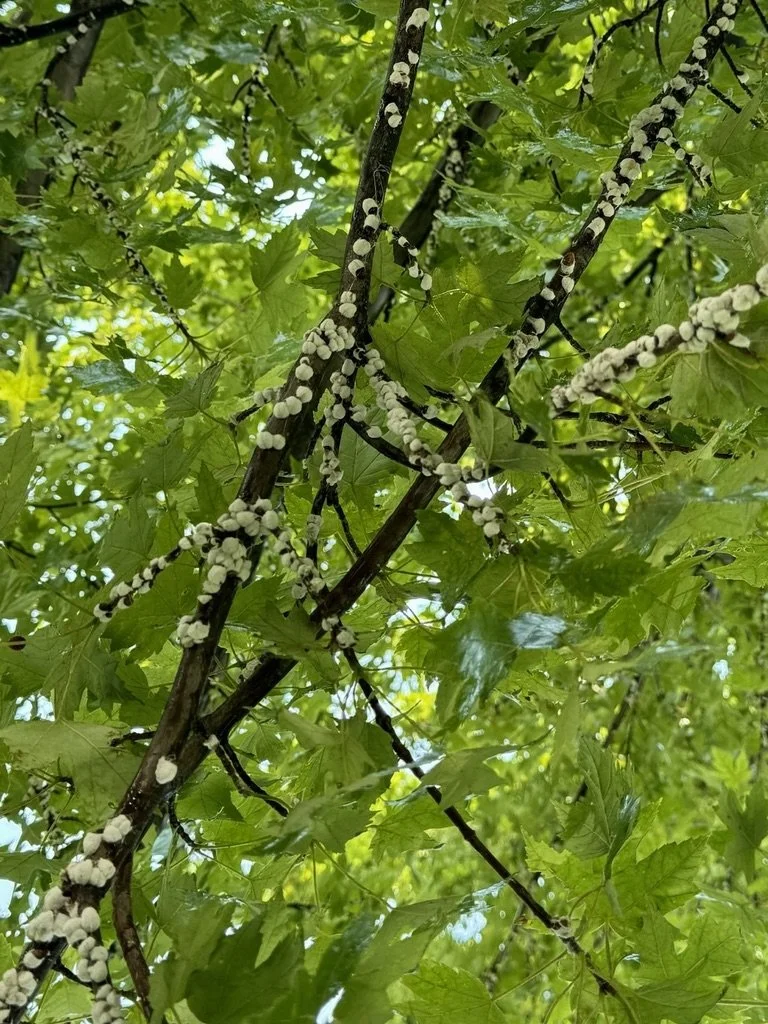
- Cottony Maple Scale Infestation
Heavy Cottony Maple Scale infestation on a maple tree in Idaho Falls. The white cotton-like masses are egg sacs produced by the female scale insect.
What Is Cottony Maple Scale?
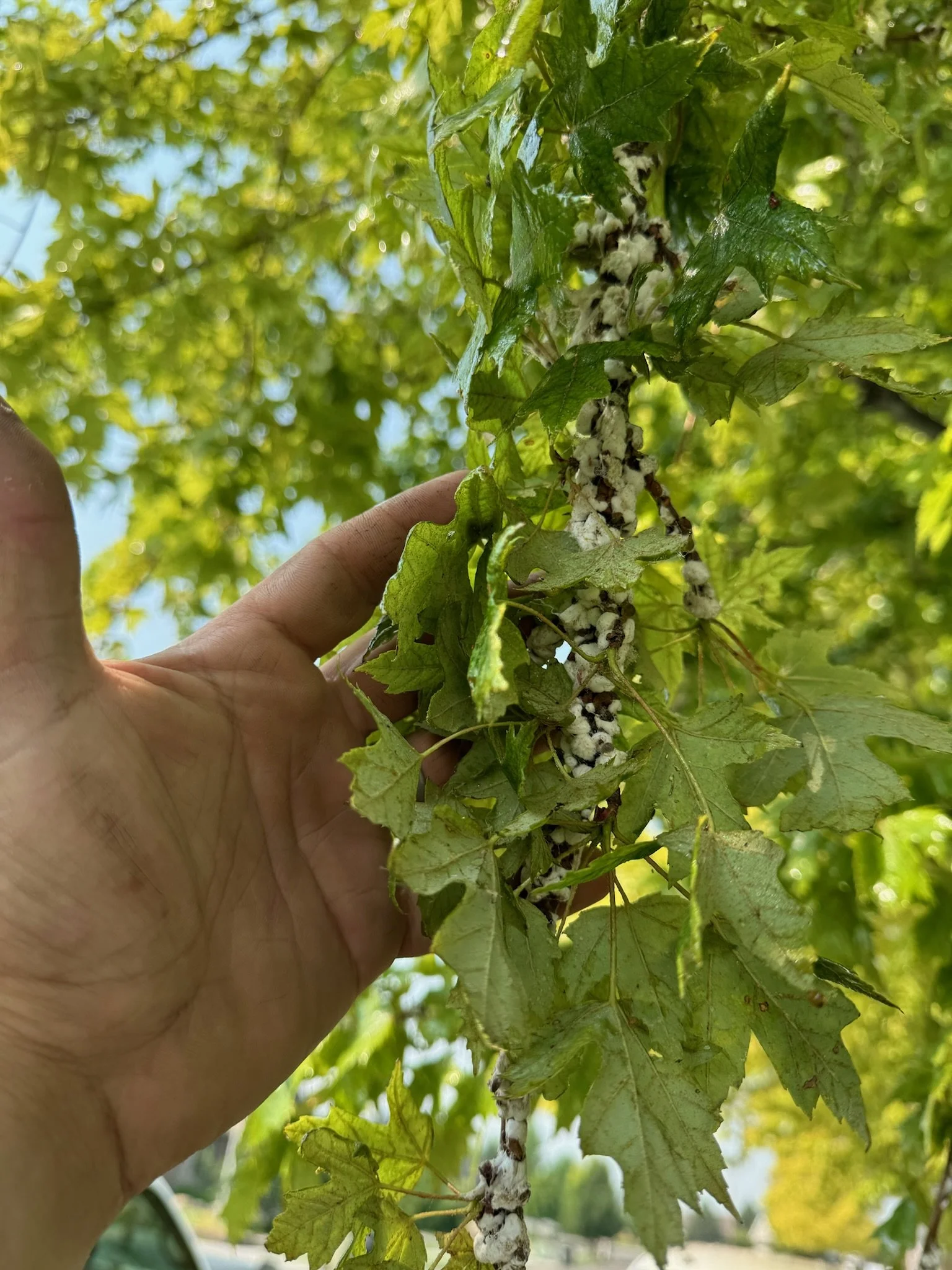
- Severe Cottony Maple Scale Population
Large populations of Cottony Maple Scale can completely cover young branches and twigs, weakening the tree over time.
Cottony Maple Scale is a soft scale insect that attaches itself to the underside of branches and feeds on the tree throughout the growing season.
One of the most interesting things about Cottony Maple Scale is that the white "cotton balls" homeowners notice aren't actually the insect itself.
The white hanging masses are egg sacs produced by the female scale insect. Each egg sac can contain hundreds, and sometimes even thousands, of developing insects.
Many homeowners assume that once the eggs hatch, the white masses disappear. In reality, the old egg sacs and scale coverings often remain attached to the tree for months and sometimes even years after the insects have emerged.
During early to mid-summer, those eggs hatch into what is known as the crawler stage.
This is when the newly emerged insects leave the egg sac and begin moving throughout the tree, typically targeting new growth and tender plant tissue.
The crawler stage is important because it is also when the insects are at their most vulnerable.
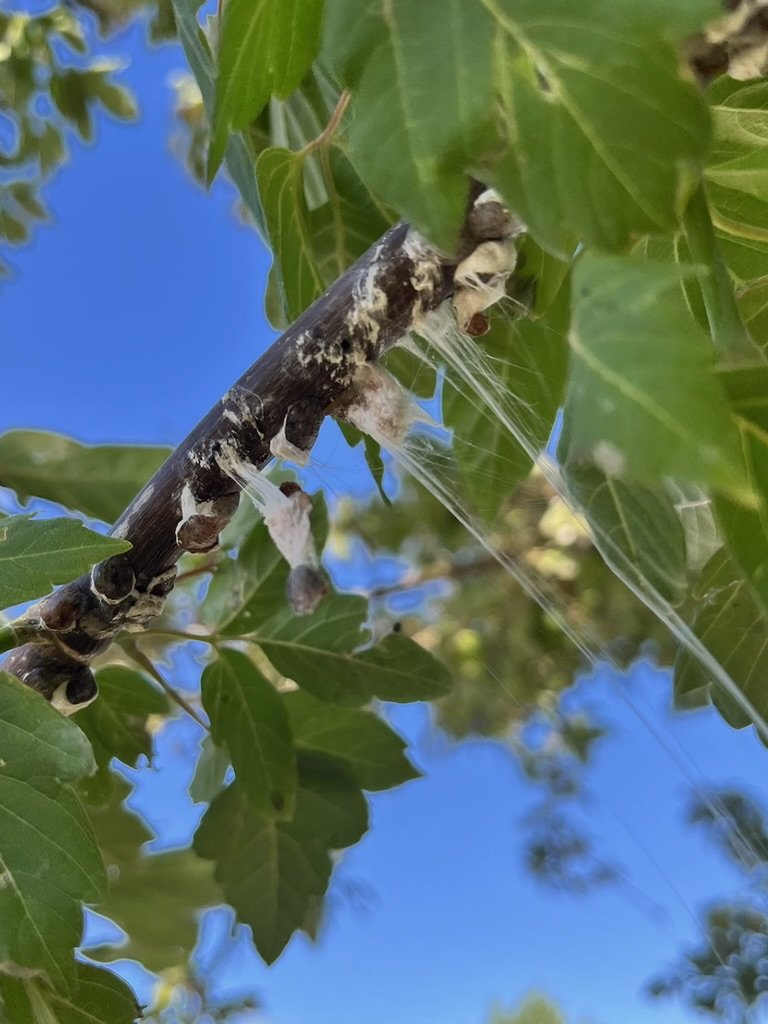
- Cottony Maple Scale Egg Sacs
The white cotton-like material is actually an egg sac. Hundreds of new insects can emerge from each sac during the crawler stage.
Will Cottony Maple Scale Kill My Tree?
Not immediately.
This is one of the biggest misconceptions surrounding Cottony Maple Scale.
Many homeowners assume the insects are simply cosmetic and don't actually harm the tree.
Unfortunately, that isn't true.
While Cottony Maple Scale rarely kills a tree quickly, it places significant stress on the tree over time.
As populations increase, they remove water and nutrients from the tree and create conditions that allow other problems to develop.
Over time, heavily infested trees often experience:
Reduced vigor
Smaller leaves
Thin canopies
Premature leaf drop
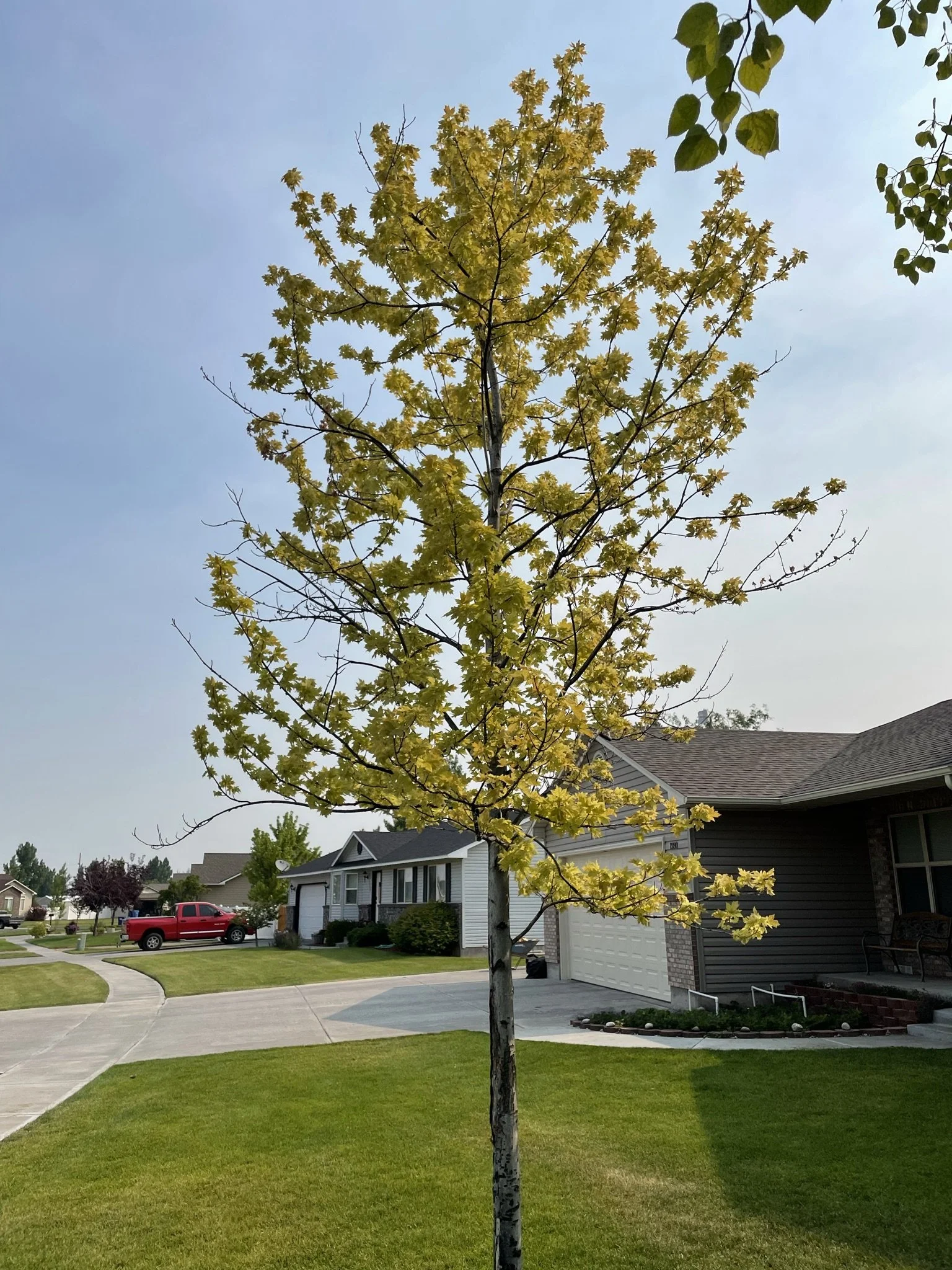
Increased susceptibility to chlorosis
Increased susceptibility to environmental stress
Left untreated for enough years, severe infestations can absolutely contribute to tree decline and eventual mortality.
Why Is My Tree Sticky?
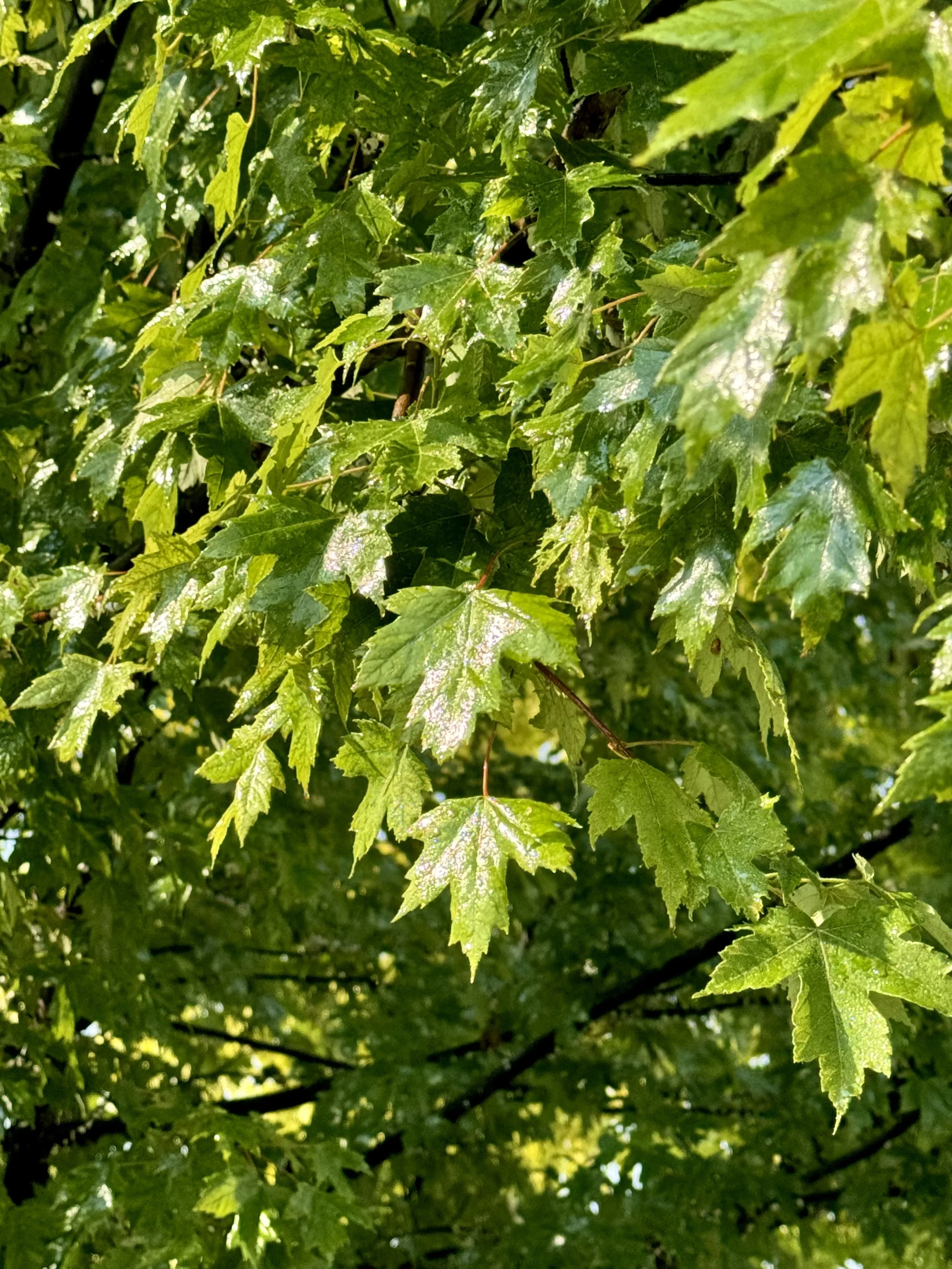
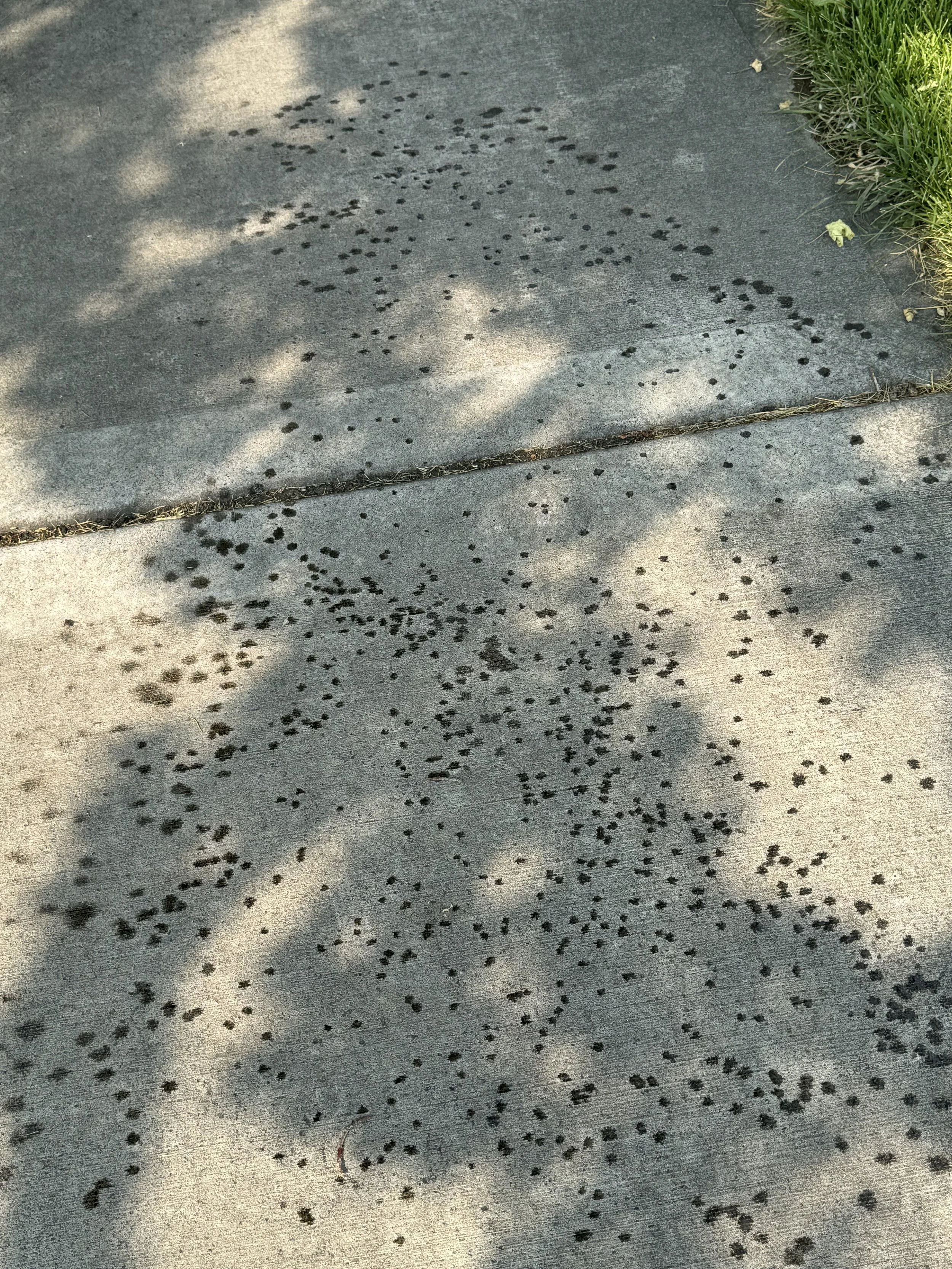
One of the most common complaints associated with Cottony Maple Scale is sticky residue.
As the insects feed, they excrete a sugary substance known as honeydew.
Honeydew coats leaves, branches, vehicles, decks, patios, and anything beneath the tree.
Honeydew also attracts:
Ants
Wasps
Flies
Aphids
Other nuisance insects
Many homeowners first notice the problem because their vehicle, patio furniture, or deck suddenly feels sticky after being parked beneath the tree.
What Is the Black Stuff on My Tree?
Another common symptom is black sooty mold.
Sooty mold grows on the honeydew left behind by feeding insects.
The mold itself doesn't infect the tree, but it can make branches, trunks, and leaves appear black, dirty, or constantly wet.
Combined with honeydew and heavy scale populations, it often gives trees an unhealthy appearance.
How Do We Treat Cottony Maple Scale?
Fortunately, Cottony Maple Scale is one of the more manageable insect problems we encounter when treated properly.
For homeowners enrolled in our Tree Insect Program, we typically make four insect control applications throughout the growing season along with a fifth application in the fall: a deep-root fertilization.
The first and last applications of the season include a combination of insecticide and dormant oil. The two middle applications consist of insecticide treatments timed around insect activity and crawler emergence.
Dormant oil is actually one of the most effective tools we have for controlling scale insects.
Unlike traditional insecticides, dormant oil works by coating and smothering the insects. This is particularly important because scale insects develop a protective outer covering that can make them difficult to control with insecticides alone.
In severe infestations, we may also utilize systemic insecticides.
Systemic insecticides move through the tree's vascular system and provide protection from the inside out. As insects feed on the tree, they ingest the active ingredient and are controlled as a result.
Why Do We Deep-Root Fertilize Trees?
Many homeowners think fertilization is simply about making a tree grow faster.
While deep-root fertilization can encourage healthy growth, our primary goal is improving the overall health and vigor of the tree.
A healthy tree is a lot like a healthy person.
The healthier it is, the better it can withstand environmental stress, recover from insect damage, resist disease, and defend itself against future problems.
When combined with proper insect management, maintaining strong overall tree health is one of the most effective ways to protect valuable landscape trees for the long term.
Can Cottony Maple Scale Be Controlled?
Absolutely.
Another common misconception is that Cottony Maple Scale cannot be controlled.
In reality, it is one of the more manageable insect problems we encounter when addressed properly.
Like any insect management program, no treatment can realistically guarantee 100% control. Weather, tree size, infestation levels, and environmental conditions all play a role.
However, properly timed treatments routinely provide excellent control, and each application helps reduce populations significantly. Over time, this allows us to bring infestations under control and maintain healthy trees long-term.
The Bottom Line
If you're seeing white cotton-like masses hanging from the underside of branches, there is a good chance your tree has Cottony Maple Scale.
While the insects rarely kill a tree quickly, they can create long-term stress that leads to declining tree health and other secondary problems.
The good news is that Cottony Maple Scale is highly manageable when identified early and treated correctly.
If you suspect your maple tree may have Cottony Maple Scale, don't ignore it. The sooner the problem is addressed, the easier it is to protect the long-term health of your tree.