Why Wind Matters When Spraying Lawns & Trees in Idaho Falls
One of the most common questions we hear from customers is:
"Why didn't you spray my lawn today? It didn't seem that windy."
The short answer is simple:
Because weather can make or break a pesticide application.
Whether we're treating lawns for weeds, protecting trees from insects, or applying fertilizer, weather conditions play a major role in how effective an application will be.

Proper coverage is critical, but so is keeping products on target.
Wind Is More Than Just an Inconvenience
When most people think about spraying, they picture the product going exactly where it is intended.
Unfortunately, that's not always the case.
As wind speeds increase, spray droplets can move away from the target area in a process called drift.
Instead of landing on the weeds, trees, or insects we're trying to control, those droplets can end up:
On neighboring properties
In flower beds
On vehicles
In gardens
On desirable plants
Or simply lost into the air
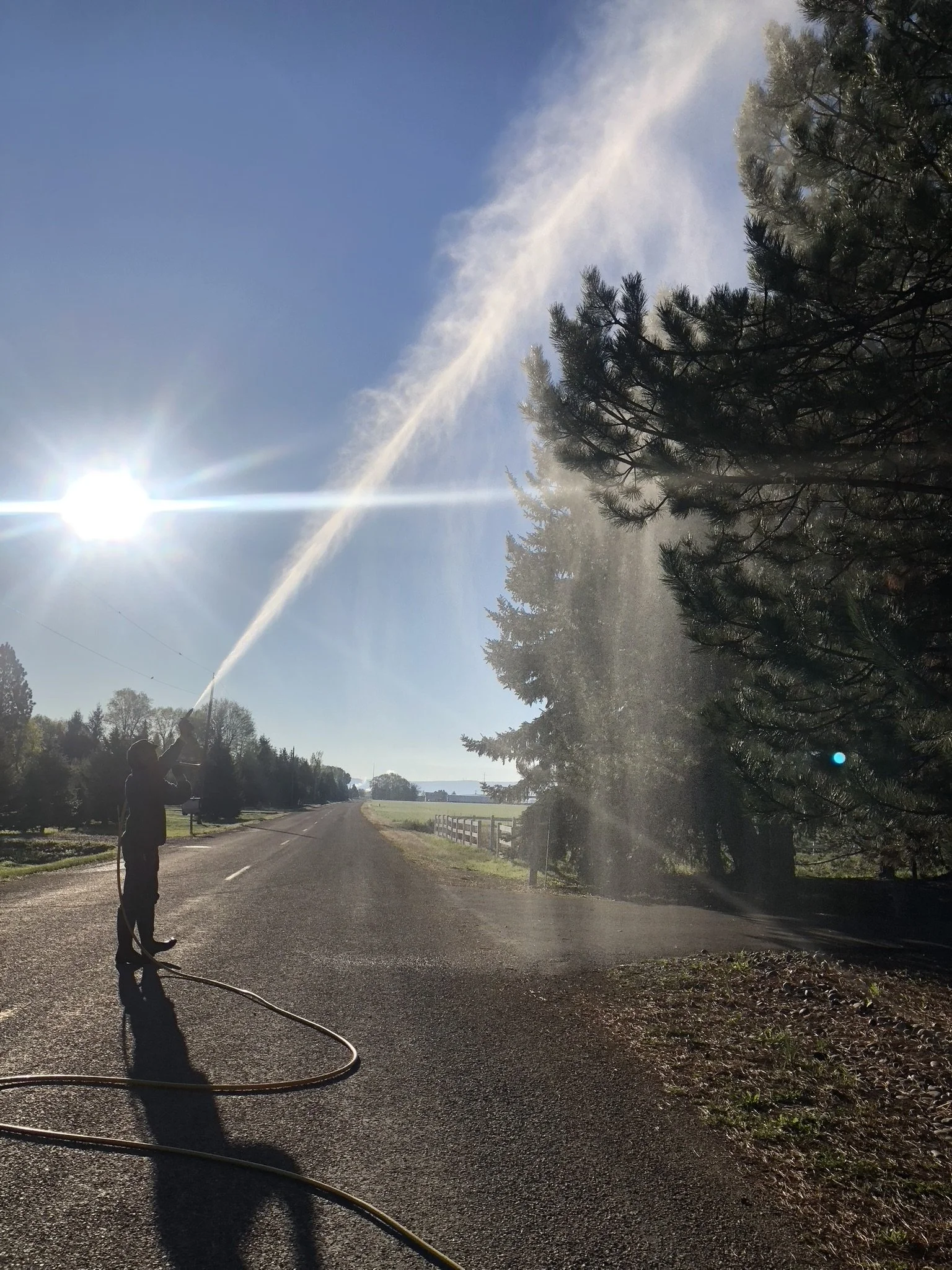
Even a perfectly applied product cannot work if it never reaches its intended target.
Why Drift Matters
Drift isn't just about wasted product.
Many herbicides are designed to kill broadleaf plants. If those products move off target, they can damage ornamental trees, shrubs, flowers, gardens, and other desirable plants.
Professional applicators don't just monitor weather because we're concerned about product performance. We also monitor weather because we want applications to stay exactly where they're intended. Whether we're treating a lawn for weeds or a tree for insects, the goal is simple: put the product on the target, keep it off desirable plants, and avoid unnecessary movement into surrounding areas. Proper weather conditions help us achieve both better results and responsible applications.
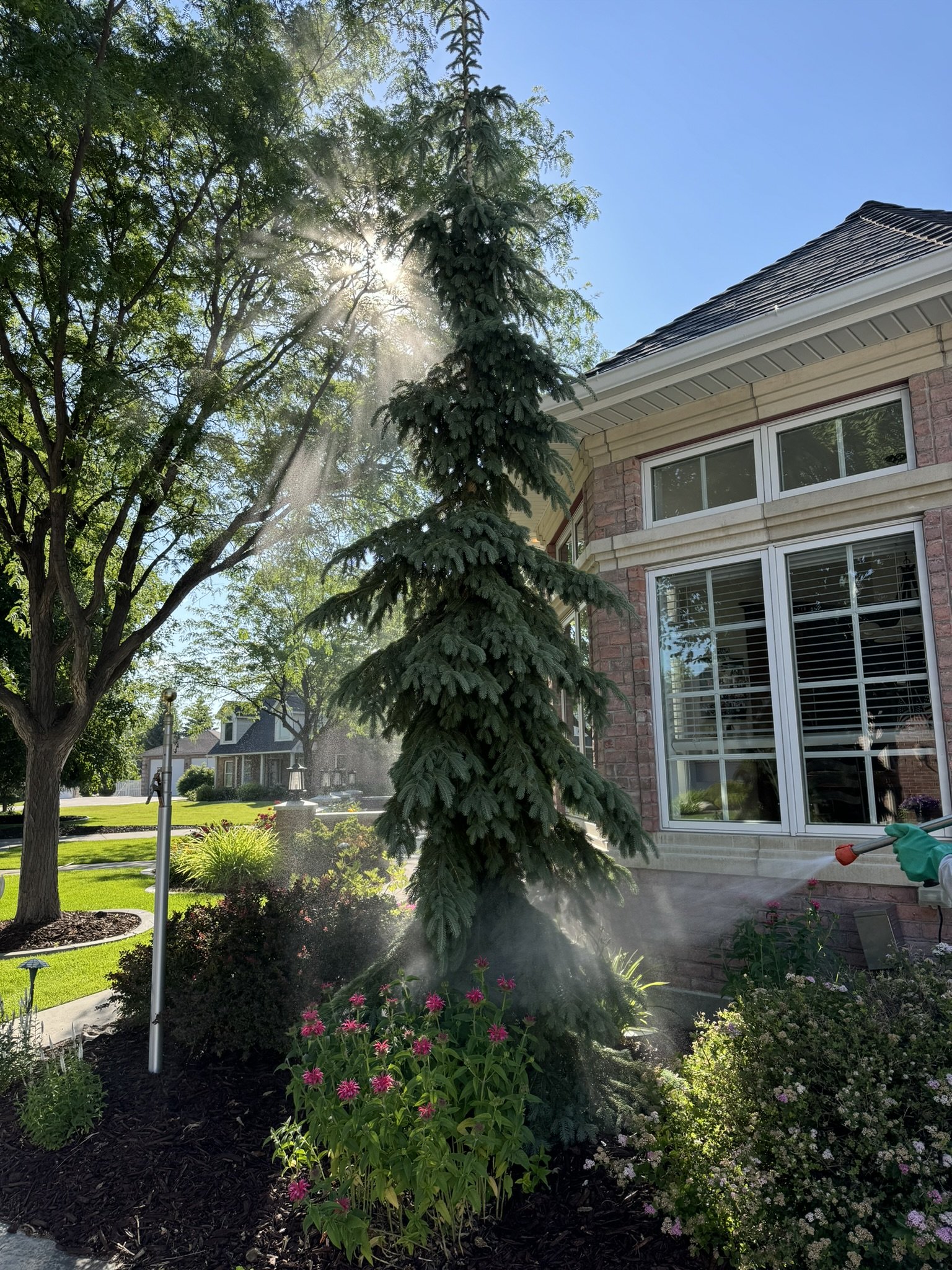
Tree treatments require complete canopy coverage to be effective.
It's Not Just About Wind Speed
Many people assume there is a specific wind speed where spraying suddenly becomes unsafe.
In reality, it's more complicated than that.
Different products have different label requirements.
Some products may allow applications under certain wind conditions while others have much stricter restrictions.
Wind direction also matters.
A 10 mph wind blowing across an open field is very different than a 10 mph wind blowing directly toward a neighbor's flower bed or vegetable garden.
Professional applicators evaluate:
Wind speed
Wind direction
Temperature
Humidity
Product label requirements
Surrounding landscape conditions
before making an application.
Other Weather Conditions Matter Too
Wind isn't the only factor.
Temperature
Extremely hot temperatures can reduce herbicide performance and increase the likelihood of certain products moving off target.
Drought Stress
Plants that are drought stressed often do not absorb products effectively.
A weed that is barely growing is much harder to control than one that is actively growing and healthy.
This is one reason weed control results can vary throughout the season.
Rain
Rain can sometimes wash products off the target surface before they have enough time to be absorbed.
Different products have different rain-fast periods, which is why timing matters.
Why We Sometimes Reschedule Applications
There are days when customers expect us to arrive, but weather conditions simply aren't cooperating.
When that happens, we may delay an application until conditions improve.
While this can occasionally be frustrating, it ultimately leads to:
Better weed control
Better insect control
Better tree health results
Less risk of drift
Less risk of damage to surrounding plants
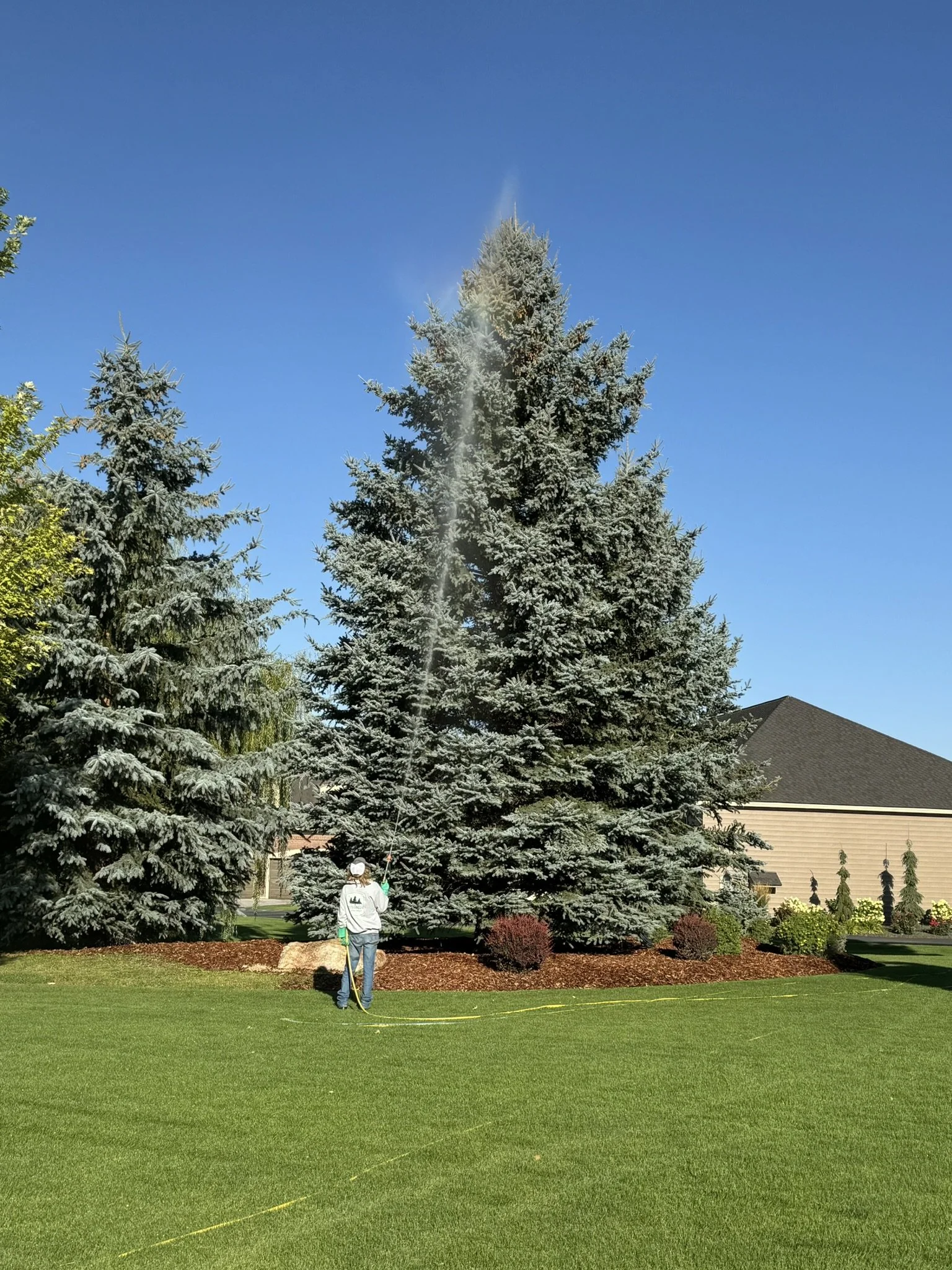
In short, waiting for the right conditions usually produces better results than spraying simply because we are scheduled to be there.
Effective Applications Start With Good Conditions
Contrary to popular belief, most delays aren't because conditions are unsafe.
They're because conditions aren't ideal.
If we're going to spend your money and our time applying a product, we want it to work.
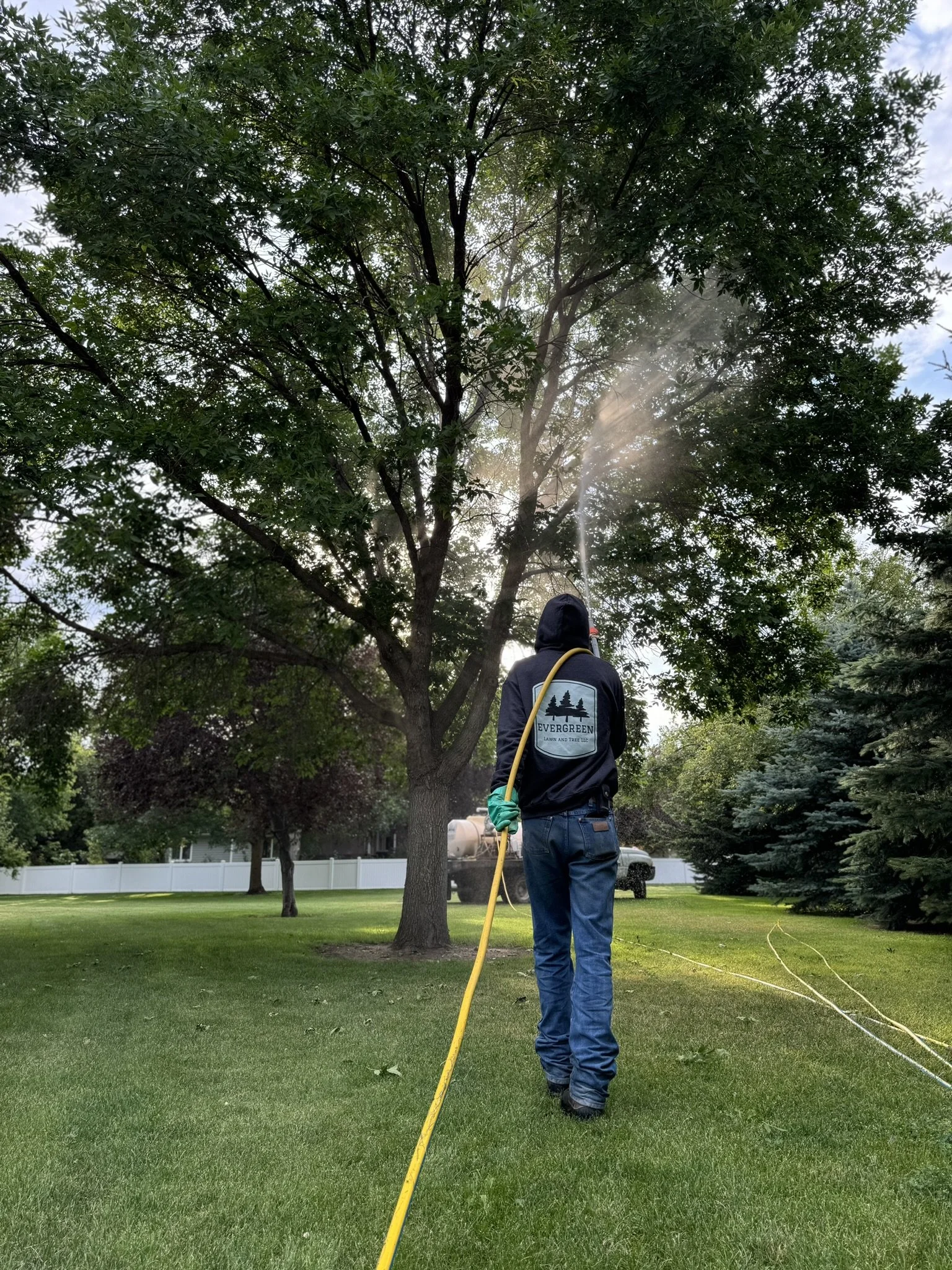
Weather plays a major role in determining how successful an application will be, and sometimes the most professional decision we can make is to wait for better conditions.
The Bottom Line
The success of a lawn or tree treatment doesn't begin when the product leaves the spray tank.
It begins with proper timing and favorable weather conditions.
Wind, temperature, humidity, drought stress, and rainfall all influence how effective an application will be.
Sometimes the best decision a professional applicator can make is to wait for a better day.
At Evergreen Lawn & Tree, our goal isn't simply to apply products. Our goal is to apply them safely, responsibly, and under conditions that give you the best possible results.